The one that goes in the bag
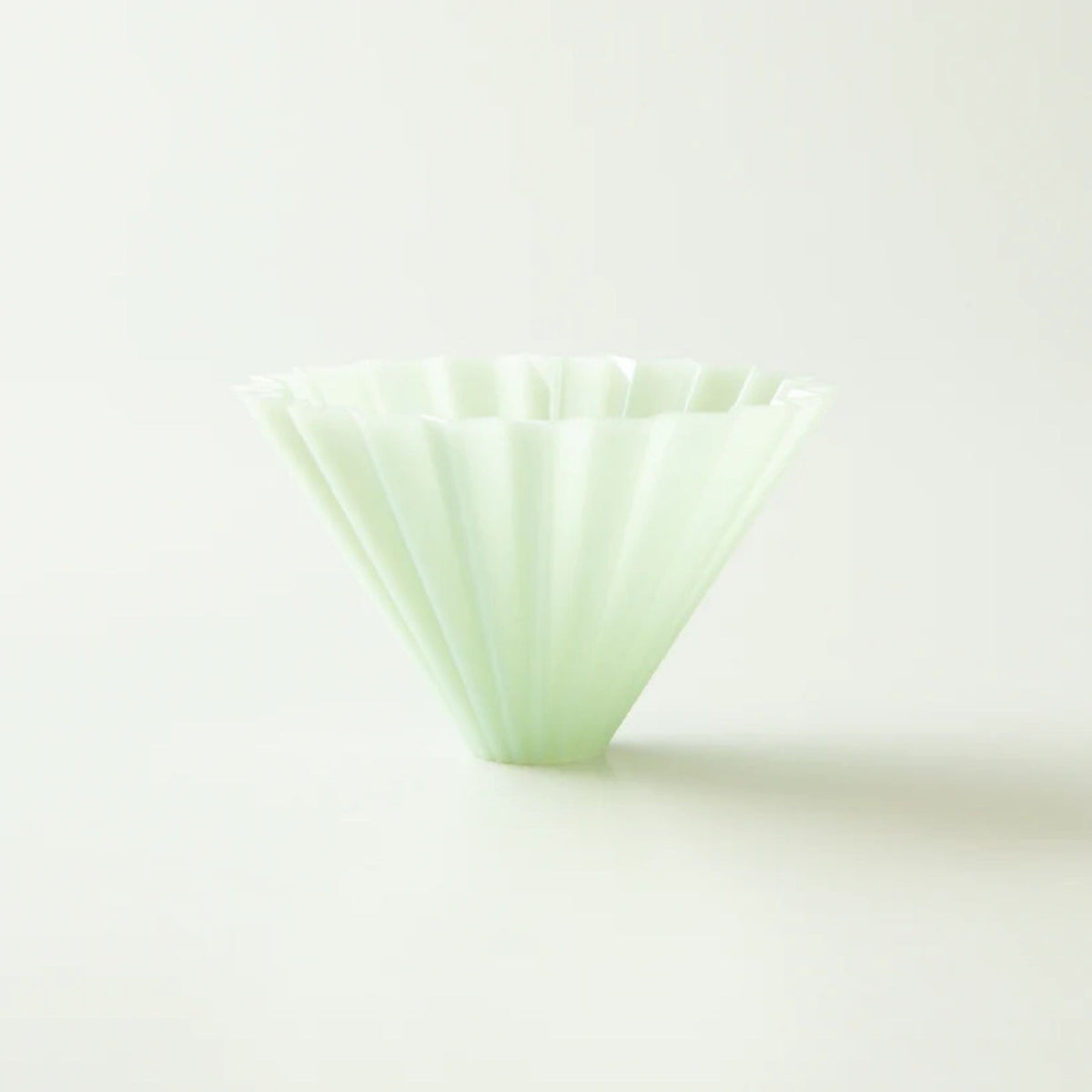
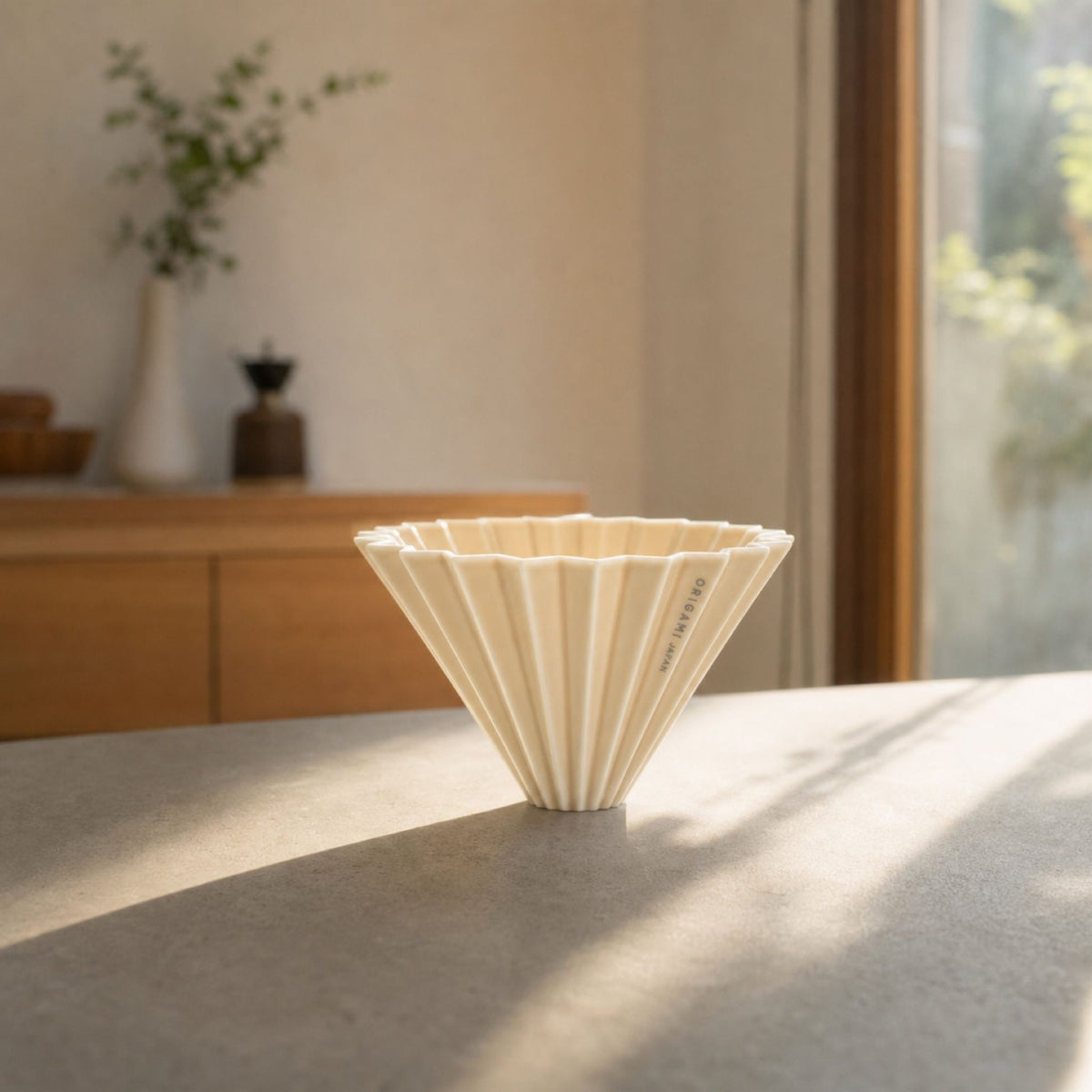
The Air is the Origami dripper in AS resin. Twenty ribs, a 25 mm outlet, cone papers and wave papers — the same geometry as the porcelain, about half the weight, and effectively unbreakable.
It's cheaper. It is not the compromise.
Why competition brewers travel with plastic
Thermal mass is the thing nobody puts on a product page. A cold ceramic dripper is a dense lump of material sitting directly in the path of your brew water, and it takes heat out of the first pour whether you like it or not. Resin has almost none of that mass to steal.
So the Air loses less heat during the brew and needs no preheat. Rinse the paper because paper needs rinsing, not because the dripper is cold. Porcelain holds heat better once it's warm — that's real — but getting it warm is a step, and it's the step everyone skips on a Tuesday.
Add the tall ribs and the wide outlet and the Air has the fastest, most consistent drawdown in the range. Grind a touch finer than you would for the ceramic.
The ribs, briefly
Twenty of them, running straight down the wall, and tall. The filter touches the ribs and almost nothing else, so there's a continuous air gap between paper and dripper. Air escapes instead of forming a vacuum, water drains down the channels as well as through the bed, and the brew rarely stalls. Where a V60 punishes a slightly fine grind by choking, the Air keeps moving.
What you give up
Feel, mostly. Porcelain is the nicer object, and looks like something rather than like equipment. Resin scratches over years and picks up faint staining from dark roasts.
That is the whole list. The coffee is not worse.
Which filters — M size
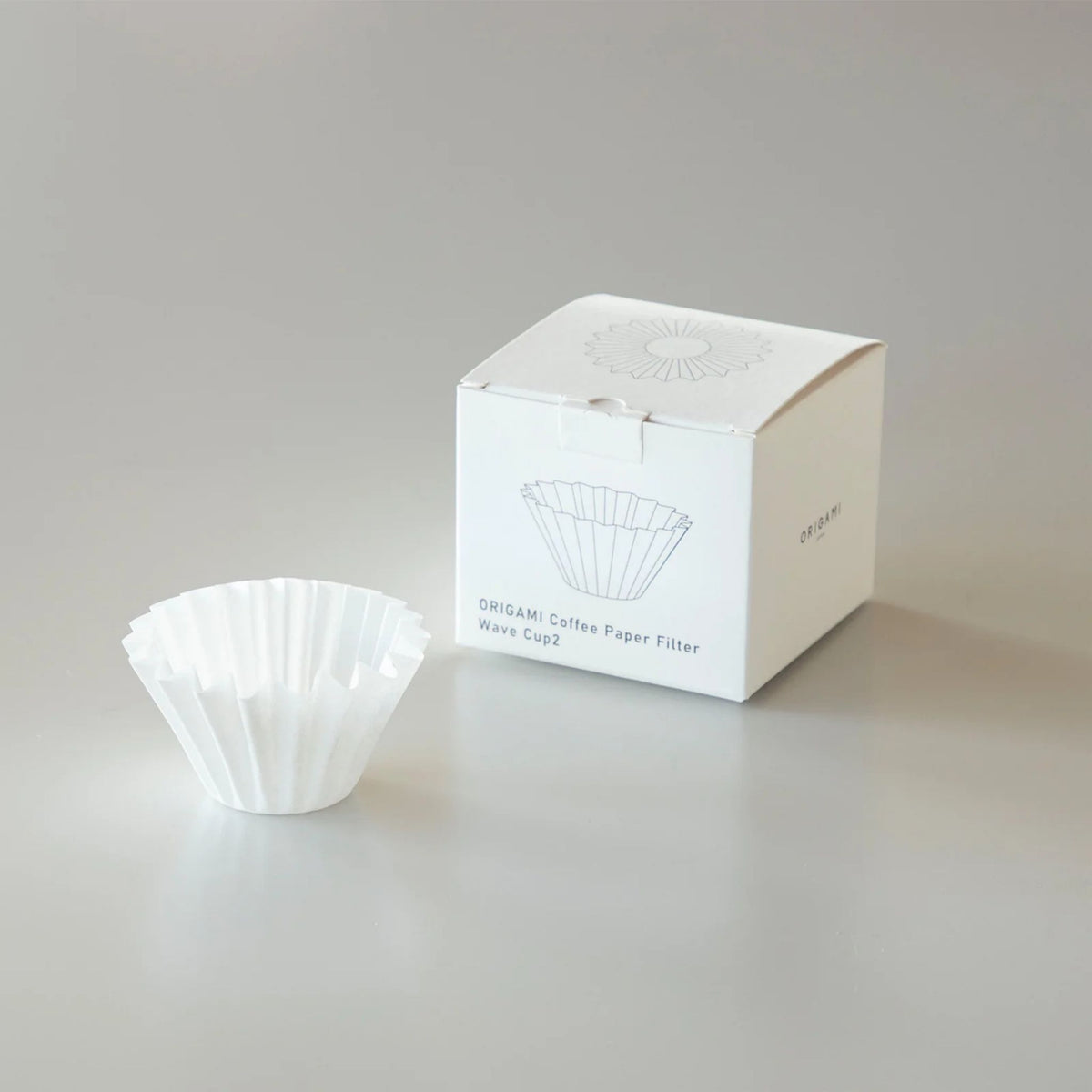
- Origami paper — Cup 4
- Hario V60 paper — 02
- Cafec Abaca — Cup 4 / 02
- Kalita Wave paper — 185
Cone papers for clarity, wave papers for consistency. Very few drippers give you the choice.
The holder
It doesn't come with one. We'd rather say that here than read it in a returns email. The base is a plain ring, so it sits on a carafe or a wide mug directly, but not on a narrow cup — Origami's resin and wooden holders solve that.
Where to start
- Coffee: 20 g, a touch finer than for the ceramic
- Water: 320 g at 93 °C
- Bloom: 50 g, 40 seconds
- Then: up to 180 g, then up to 320 g
- Total: 2:15 to 2:30
No preheat. Rinse the paper anyway. Dishwasher when you're done.
Who buys it
People who already own a ceramic dripper and want one for the office. People who camp, cycle, or travel with coffee gear. People who have broken a dripper before and would rather not repeat the experience. And people buying their first pour-over, who are better off spending the difference on a grinder.