Comayagua coffee: the Honduran region that quietly got very good
Honduras is now the fourth largest arabica producer in the world. It grows roughly as much coffee as Ethiopia does, from a country a tenth the size. Almost nobody outside the trade knows this, which is a strange gap in coffee's collective knowledge and one worth closing.
Comayagua is one of the six coffee regions defined by IHCAFE, the Honduran coffee institute, and it sits right in the middle of the country.
Where Comayagua is
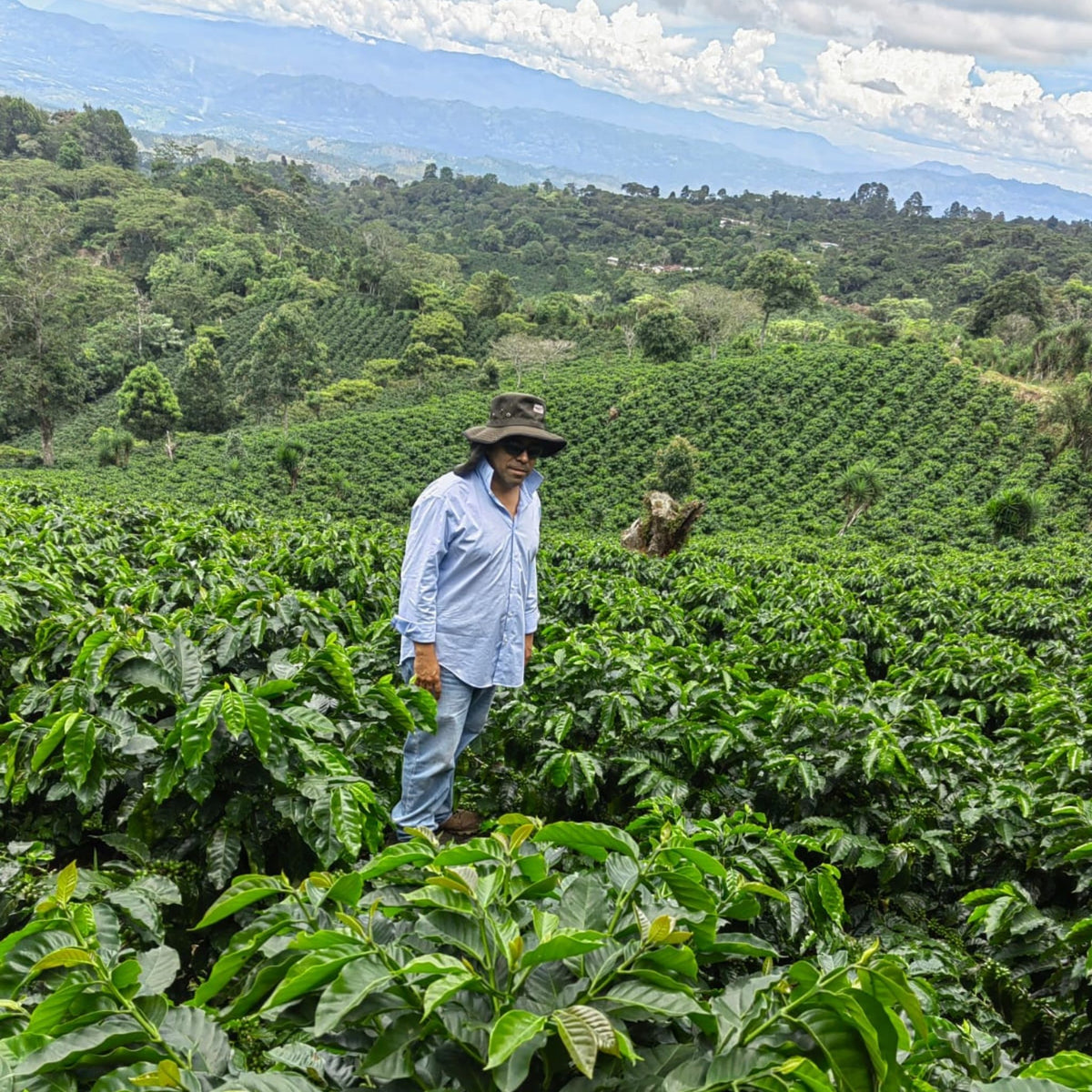
The region takes its name from the Comayagua valley and the department around it, in central Honduras between Tegucigalpa and San Pedro Sula. Coffee grows on the slopes rising out of that valley, particularly along the Montecillos mountain range, between 1,000 and 1,500 metres.
Comayagua town was the Honduran capital until 1880, which explains why a place most coffee drinkers have never heard of has such a grand colonial centre.
Reading the Honduran grading system
Honduran bags carry altitude codes, and once you know them they are genuinely useful.
SHG, Strictly High Grown, means 1,350 metres and up. This is where the good stuff sits.
HG, High Grown, covers 1,200 to 1,350 metres.
Central Standard is below 1,200 metres.
You will often see EP attached as well, which stands for European Preparation and means the coffee has been sorted to allow no more than around four defects per 1,000 beans. SHG EP on a Honduran bag is shorthand for "this has been grown high and sorted properly".
The best Comayagua lots sit comfortably in SHG territory.
The variety mix is a small history lesson
Comayagua grows an unusually broad spread: Catuaí, Caturra, Pacas, Villa Sarchí and Typica alongside IHCAFE-90, Lempira and Parainema.
The first group is the classic Central American set, mostly Bourbon and Typica descendants selected for flavour. The second group tells you what this country has been through. IHCAFE-90, Lempira and Parainema were all bred or adopted for resistance to coffee leaf rust, the fungal disease that tore through Central America from 2012 and wiped out a devastating share of the crop.
A region that has taken some hits
Honduran coffee history is not a smooth upward line. Hurricane Mitch destroyed something like 70 to 80% of the country's agriculture in 1998. Leaf rust arrived in force in 2012. Either one could have ended the industry.
Instead the sector rebuilt, and did it by getting better rather than bigger. Government investment went into wet milling infrastructure, traceability systems and technical support through IHCAFE. Production climbed from around 3.6 million bags in 2009 to well over 6 million today.
There is a detail here that says a lot. The average age of a Honduran coffee farmer has been falling, down to around 46, while it rises almost everywhere else in Central America. Young people are choosing to stay in coffee. That is the clearest possible signal that the economics are working.
Over 100,000 families grow coffee in Honduras, and roughly 95% of them farm less than two hectares.
What it tastes like
Comayagua is the friendly one. Sweet and citric, with bright acidity sitting on a creamy, rich body. Orange and caramel over milk chocolate is a fair summary. It is less wild than an Ethiopian, less punchy than a Kenyan, more lively than a Brazilian.
It is a brilliant everyday coffee and an excellent gateway origin if you are moving someone from supermarket coffee toward specialty without frightening them.